What we learned at DTX + UCX London, and what it means for your business
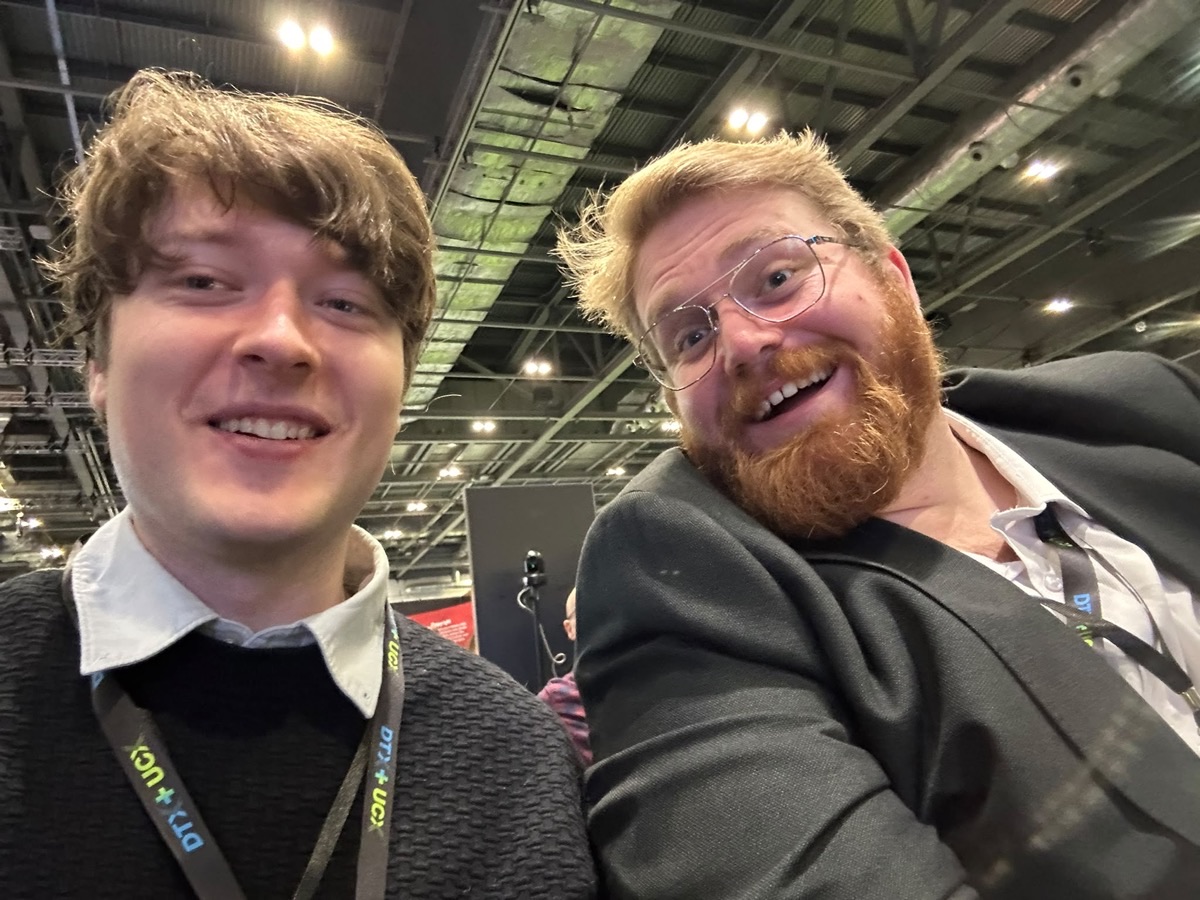
Dan and I spent two days at ExCeL London for DTX + UCX. The big lesson: technology on its own is not the answer. Here is what stuck with us.
By Jonathan Fleet · · 6 min read
In short
- Fix the process before you add the technology. Automating a messy process just makes the mess faster.
- Numbers need context. Two things happening together does not mean one caused the other.
- Good customer experience is built on trust, and it carries on long after the sale.
- Change works best with clarity, empathy, a learning mindset and momentum.
- Switching software is a change for your whole team, not just an install.

Earlier this month (14 and 15 October), Dan and I headed down to ExCeL London for DTX + UCX: two days of talks, panels and conversations about technology, data and customer experience. Bright blue skies outside, a vast hall of stands and stages inside.
You might expect a tech show to be all about the latest shiny tools, and there was certainly plenty on show. But the message that kept coming up, session after session, was refreshingly down to earth: technology on its own isn't the answer.
Software is only as good as the processes it supports, the information it holds, and whether people actually want to (and can) use it. Honestly, it felt like the whole event was making the case for why we built Osmuch in the first place. Here's what stuck with us, and what it means for you.

Fix the process before you add the tech
The line I heard most over the two days: new technology struggles when it's dropped on top of a broken process. Automating a good process makes it faster. Automating a messy one just makes the mess faster, and harder to untangle.
Sound familiar? Customer details in one spreadsheet, stock in another, quotes in a Word document, jobs on a whiteboard and invoices somewhere else entirely. Every time you copy something from one place to another there's a chance for a typo, a missed job or an invoice that never goes out.
That's exactly the problem Osmuch solves. Your customers, stock, suppliers, quotes, projects, invoices and scheduling all live in one joined-up place, so information carries from one step to the next without retyping. Win a quote and turn it into a project with every line carried across. Finish the project and invoice it from the same lines. One process, start to finish.
Your numbers should tell you something useful
Another big theme was data, and how good information starts long before it reaches a report. Duplicate records, inconsistent naming and half-finished entries quietly undermine every decision you make with them.
A great reminder from the sessions: just because two things happen together doesn't mean one caused the other. If sales dip at the same time stock runs low, it's tempting to join the dots. But it could just as easily be the time of year, your pricing, or a quiet month. A number on its own rarely tells the full story.
Most small business owners aren't data analysts, and they shouldn't need to be. Osmuch keeps to the questions you actually ask: who owes you money and how overdue it is, which projects are on, and what is running low. Because everything sits in one system, those answers come from one consistent set of records rather than five spreadsheets that don't quite agree.

Great customer experience is built on trust
The customer experience panel was a real highlight for both of us. A few points I scribbled down:
- Talk to the people doing the work. Something that looks logical on paper can be a daily annoyance for the person using it.
- Trust is part of the experience. People want to know their information is handled properly and that they're still in control.
- Launch day is the start, not the finish. Good software needs looking after, supporting and improving, long after the sale.
- Don't chase every trend. It's easy to get distracted by the latest buzzword and forget the problems your customers actually need solved.
That last one really landed. We'd always rather build fewer things that work brilliantly than pile on features nobody asked for.
Dan's four pillars of change
Dan came away with a framework we both loved. Good change rests on four pillars:
- Clarity: start with a real, clearly defined problem. What are we solving, for whom, and how will we know it worked?
- Empathy: change makes people anxious. A workflow that looks clunky from the outside might be familiar and reliable to the person using it. Listen first.
- Learning mindset: be willing to question your assumptions. Test small, learn, then scale.
- Momentum: keep improving at a steady pace, and be brave enough to change course when something isn't working.
It's a brilliant way to think about bringing any new system into a business, including ours. Switching software isn't just an install; it's a change for your whole team. We'd much rather help you get set up around the way you already work than hand over a login and wish you luck.
Not an early adopter? Even better
One of the most interesting conversations we had was about who new software is really for. Early adopters love trying new things (thank you if that's you). But most businesses we speak to are perfectly capable with their spreadsheets and paperwork. They're just busy, and they need confidence that switching won't cause chaos.
If that's you, we built Osmuch with you in mind:
- One place for everything: customers, stock, suppliers, quotes, projects, invoices and scheduling.
- No more retyping: a quote becomes a project, and a project becomes an invoice.
- Stock control that fits a small business, from part quantities to vans and multiple locations.
- Works without signal, so the paperwork keeps going in basements and plant rooms.
- A real person to talk to: we're a small Shropshire company, and you'll be speaking to us.
Final thoughts
If I had to sum up the two days in one sentence: build with purpose, keep things simple, make information easy to understand, and look after your customers long after they sign up. That's exactly what we're doing at Osmuch.
A huge thank you to the DTX + UCX organisers, all the speakers and panellists, and everyone who stopped for a chat. And thanks to Dan for being an excellent conference buddy and an even better note-taker.
We came home with full notebooks, tired feet and plenty of energy to keep making Osmuch even better. If you're juggling spreadsheets, paperwork and too many separate apps to run your business, let's talk. Press Contact us below and tell me how you work today. I'd genuinely love to hear from you.
Doing this in Osmuch
Osmuch runs a small business from one place: customers and suppliers, stock across every location, quotes, projects, invoices, VAT and the team calendar. A quote becomes a project with every line carried across, and a finished project becomes its invoice, so nothing is typed twice. The dashboard brings low stock, active projects, open quotes and the team calendar together, all from the same records.
Guide: turning a quote into a job · Guide: invoicing a completed job · Guide: setting up your organisation